integrative learning
M.Ed. in Integrative Learning
Education for a Living Earth
Underneath the surface, something profound is emerging in teaching and learning. More educators are sensing that we have reached a threshold—that the old models of schooling, designed for an industrial age, can no longer serve the world. Educators are asking deeper questions: What if learning isn’t singularly focused on delivering curriculum but also on facilitating human development? What if classrooms could be designed with systemic principles rather than industrial models? What if education could help us remember we are part of Earth’s story, not separate from it?
These are not abstract questions—they are urgent invitations for anyone who recognizes that education needs to serve both human development and the flourishing of all life.
The TIES M.Ed. in Integrative Learning exists at the intersection of these questions. Drawing on Thomas Berry and Brian Swimme’s vision of the universe story, Indigenous wisdom traditions, deep ecology, systems thinking, and contemplative practices, this program prepares educators who can facilitate transformation in themselves, their students, and the Earth community.
If you’re an educator ready to explore these questions—to understand teaching within an integrated context, to develop practices rooted in connection rather than separation, to discover your role in Earth’s unfolding story—this is the journey calling you.
Download
The Great Work
The Great Work: Reimagining Our Human Role
Thomas Berry’s concept of the Great Work calls us to move beyond the devastation caused by unchecked human activity and to reimagine our role as responsible, compassionate participants on Earth. Berry’s challenge is ambitious: he urges humanity to transform itself from a destructive force to a benign and creative presence in the living world.
At the heart of this task is the need for profound personal and cultural change. Many of nus are attuned to this need that begins with educating in a new way.. TIAES” students find purpose that serves both their lives and the planet.
Berry envisions the Great Work as a generational calling, comparable in its scale to transformative historical epochs: humanity now faces the challenge of shifting our collective mindset and reestablishing a respectful, mutually beneficial relationship with the rest of the biosphere. This is our educational calling.
TIES invites students into this unique context, guiding them to reflect on their own passions, see their studies as woven into the Earth’s evolving story, and grow as agents in a process of collective renewal. Holistic learning here means engaging one’s full self—mind, heart, imagination—in a journey toward a future in tune with the rhythms of the Earth community.
Berry sees this journey as the defining movement of our era, comparable to transformative shifts in history. The Great Work requires inner and outer change—individual, cultural, and planetary—where everyone, not just a select few, is responsible for renewing our human-Earth relationship.
Through this program, learners are guided to discover and contextualize their own passions, joining a holistic effort to foster the vision addressed by Thomas Berry. Integrative learning is the bridge connecting self-awareness and purpose to the ongoing renewal of the world.
In reality, there is a single integral community of the Earth that includes all its component members, whether human or other than human. In this community, every being has its own role to fulfill, its own dignity, its inner spontaneity. Every being has its own voice. Every being declares itself to the entire universe. Every being enters into communion with other beings. This capacity for relatedness, for presence to other beings, for spontaneity in action, is a capacity possessed by every mode of being throughout the entire universe. ~Thomas Berry
Collaborative Learning Communities
During recent years there has been a proliferation of courses and degrees offered under the umbrella of distance learning. In general these academic pursuits are similar to attending a conventional university. The professor posts lectures and gives out assignments, students submit papers, there are tests and there are grades.
In contrast we promote an integrative view hosted by a uniquely designed online Campus where students work in collaborative learning communities; where faculty are mentors and co-learners; where creativity and self-direction are valued; and where there is a an understanding of dialogue as process. Right-communication embraces an appreciation for each person’s contribution.
The Online Campus
The heart of the teaching and learning process relies on interactive dialogues accessible through state of the art conferencing software. Faculty and students meet in asynchronous classroom conferences, building upon one another’s insights and understanding.
Integrative Learning Seminars
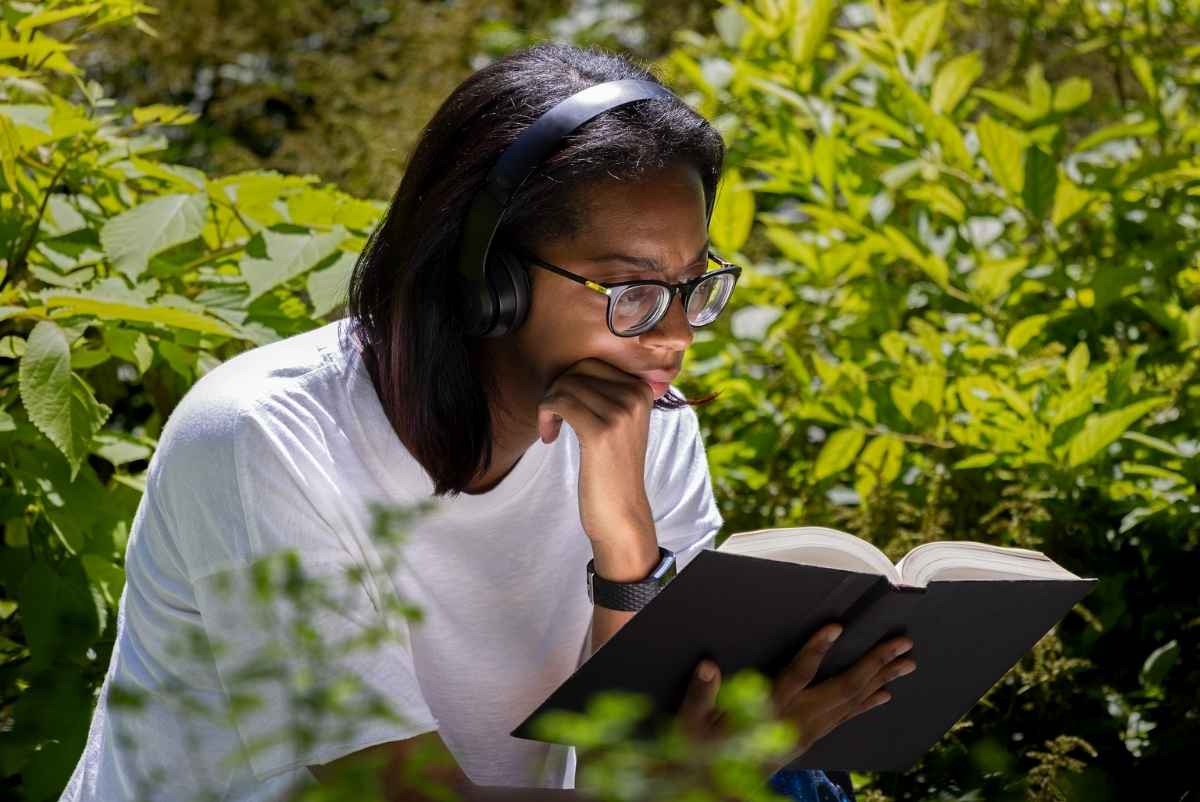
The core material and course work is presented through a series of on-line seminars where students and faculty post responses to an assigned reading (or viewing).
Subsequent to the initial posting, participants comment and weave responses, searching for new insights. Quite often the authors of the books and/or experienced scholars are available during the on-line dialogue.
A sample of an integrative seminar dialogue can be accessed from the download section at the bottom of this page.
Experiential Learning
The experiential learning or practicum is based on your Emphasis Area. Students take their new knowledge and apply it in a real setting. The practicum emerges from the research question(s) one chooses to explore and involves a minimum of 150 hours of applied learning.